|
|
Sharing the right to Jerusalem's past
un articulo por Yonathan Mizrachi, excerpted from Common Ground News Service
Jerusalem - The Palestinian village Silwan in East Jerusalem is situated about a hundred metres from the Temple Mount/Haram el Sharif. It is home to 40,000 Palestinians and almost 400 Jewish settlers. The village also hosts a large archaeological site called the "City of David" . . .
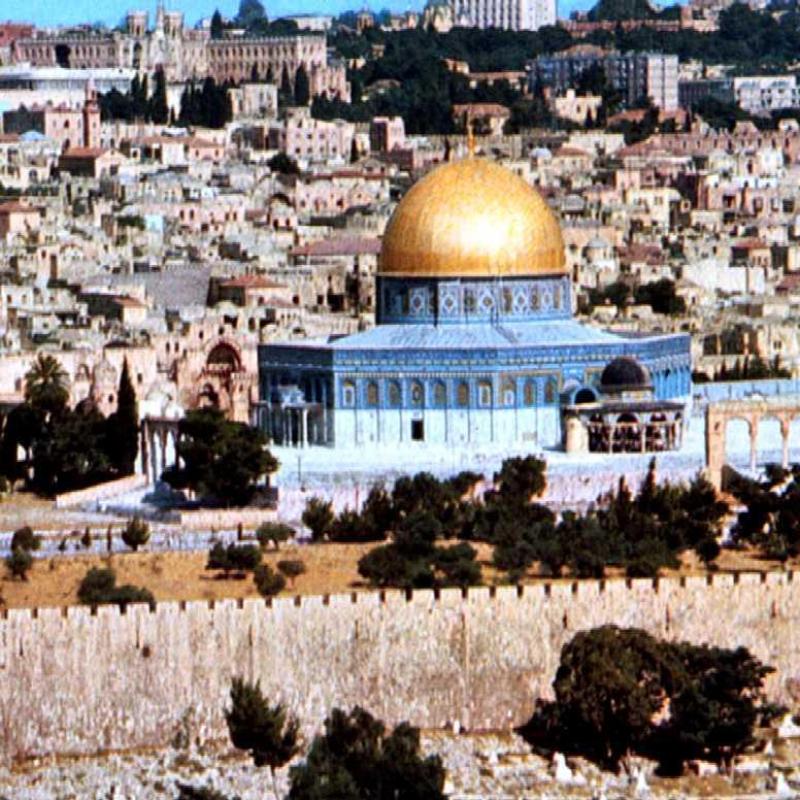
The Dome of the Rock in Jerusalem
click on photo to enlarge
Despite the diversity of cultures and histories in this area, the central story told to those who visit the City of David excavation site is that aspect of Jerusalem's history which is meaningful primarily to Jews. Stories about artefacts found at the site that testify to the existence of other cultures and religions, some of which are particularly meaningful to local Palestinian residents are omitted.
Sadly, local Palestinian residents, who have always felt proud of living in one of the places where Jerusalem first emerged, have been excluded from the story. This is all the more lamentable considering that Jerusalem is considered a holy city for all Abrahamic faiths.
In response to this reality, a group of Israeli archaeologists and social activists established Emek Shaveh, a non-governmental organisation dedicated to promoting the idea that the past belongs to everyone - regardless of their religious or national affiliation.
Any archaeological artefact tells a complex story that is independent of contemporary traditions and beliefs. Listening to the stories and what they tell us about the history of Jerusalem could enrich our present-day culture and promote tolerance and pluralism. The cultural riches of archaeological sites are inseparable from the cultural wealth of the land and belong to all communities, peoples and religions who share it. . .
To preserve Jerusalem's heritage, all sides must strive to make antiquities accessible to everyone and remember that alongside one’s own heritage there are others that are no less important. Recognising this is important for the Palestinian residents of Silwan, Israeli society and anybody who desires a better future for the parties in conflict.
|


|
DISCUSSION
Pregunta(s) relacionada(s) al artículo :
How can different faiths work together for understanding and harmony?,
* * * * *
Comentario más reciente:
:
This discussion question applies to the following articles:
Creating Harmony in the World: Working through Our Faiths in Dialogue
Alternate Focus: Balance in Media Coverage in Middle East
The Parliament of the World's Religions (Barcelona, Spain)
Asian Religious Leaders Urge Religions To Teach Peace
Living Faiths Together – Tool kit on inter-religious dialogue in youth work
Sharing the right to Jerusalem's past
The Doha Pre-Forum of the United Nations Alliance of Civilizations
Peace For Childrens in Primary Schools in Iraq
Dialogue in Nigeria -- a new DVD teaching-tool for peacemakers
4th Annual International Conference on Religion, Conflict and Peace
First Religious Youth Service Project in Pakistan
World Harmony Day at the UN Highlights the Culture of Peace
Report of Diversity Talk Series 2013, in Lahore, Pakistan
Journée d'étude à Tunis: Religions et cultures au service de la paix
Workshop in Tunis: Religions and cultures in the service of peace
Out of the spotlight, Moroccan Islamic party promotes interfaith dialogue
Muslim and Christian youth come together in Mombasa, Kenya
Greeting of Peace from United Social Welfare Society, Pakistan
Interfaith Cultural Study Tour to Nepal: Pakistan Youth Explore the Mysteries of Nepal
One Nation, One Blood (Pakistan)
Teachings of Peace
Overview of the Book, Paganism an Introduction to Earth-Centered Religions
La líder de un movimiento interreligioso Dena Merriam recibirá el 31 Niwano Peace Prize
Dena Merriam, Founder and leader of The Global Peace Initiative of Women to receive the Niwano Peace Prize
Pakistan: Scholars adopt charter of peace, support coexistence
Lebanese dialogue aims to strengthen unity in diversity
Un an du "Projet Revalorisation du Vivre Ensemble – REVE" au Niger
A Year-long Project for "Living Together - REVE" in Niger
Beating the drum for peace: A chat with the general secretary of the South Sudan Council of Churches
There’s a Place in India Where Religions Coexist Beautifully and Gender Equality Is Unmatched
Click here for articles since 2016.

|
|



 por ámbito de acción
 por fecha