|
|
World Social Forum in Belem, Brazil
an article by KDJ
This year's World Social Forum took place in Belem, Brazil, in the Amazon region, the greatest forest on the earth. It brings together the many social movements opposed to the politics of domination represented each year by the multinational corporations and financiers at the Forum of Davos in Switzerland.
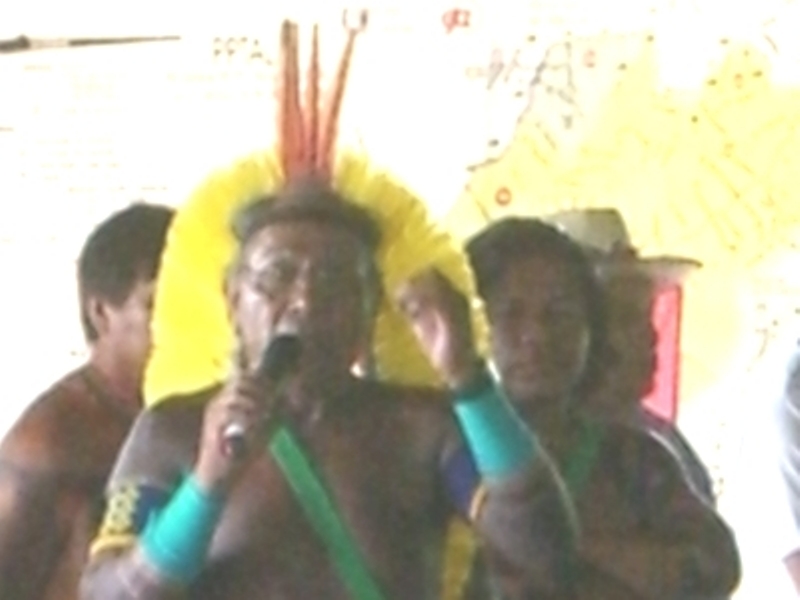
This year, for the first time, the indigenous peoples spoke as an important voice of the forum. They came from all the Amazon, which includes part of most countries in South America. They came by bus over distances that often required at least a week of travel, coming directly from their villages in the forests and along the rivers of the Amazon. They came in their warpaint; one indigenous woman explained to me that they consider themselves engaged in a fight to save their forest from exploitation and destruction by the big companies of mining, wood, etc. For them the forest is life itself, and is essential for the transmission of their traditions and cultural identity. If the forest cannot be saved, they cannot survive as a people.
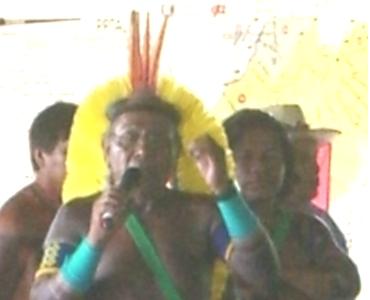
Belem participants
photo by KDJ - click on photo for enlargement
The struggle of the indigenous peoples served as a symbolic representation for all the social movements participating in the forum, working for the environment and for human rights. The first day of the Forum was consecrated to their presentations, and at the end of the Forum, their demands were reflected in most of the workshop conclusions . Even the defense of the Palestinians, ravaged by the recent Israeli invasion, was often seen as the struggle of an indigenous people to save their land against outside domination.
Another high point was the response of five South American presidents who were invited to the Forum. Their speeches supported the themes of respect for indigenous peoples, the respect for Mother Earth, independence from domination by the United States, and the need for solidarity of all Latin American countries in the face of the world economic and political crisis.
There were 135,000 inscribed participants, largely young, most from the region in and around Belem, many living in the camping village of the Forum. The spirit in the Forum was marked by their spirit, their music, their dance, their bohemian dress and lifestyle. The atmosphere was one of solidarity, sharing and exchange of contacts and ideas.
As always, there was a broad representation of civil society associations, NGOs, trade unions, social scientists and researchers coming from around the world. At the same time there was a conspicuous absence of the United Nations, of UNESCO, and a decrease in participation by North Americans.
The challenge posed by the indigenous participants for a new consciousness of respect for the planet and its inhabitants raises indirectly a question about the future of the Forum. Should it remain an informal space of dialogue and energy, or should it develop a more formal structure and strategy? Can the work of the Forum stimulate the birth of a new consciousness? To do so, must it not go beyond its role as a counterpoint to Davos?
|


|
DISCUSSION
Question(s) related to this article:
The understanding of indigenous peoples, Can it help us cultuvate a culture of peace?
* * * * *
Latest reader comment:
Two articles in recent years in CPNN point to the renewed recognition of the importance of indigenous knowledge and traditions to help save us from the ecological disaster of the global industrialized economy.
In the article preparing for the upcoming People's Summit in Rio (See CPNN April 12, 2012), Fabiola Ortiz emphasizes the importance of involving indigenous peoples in the decision-making about development projects.
The indigenous peoples of the Amazon made this argument very dramatically and eloquently in person at the World Social Forum in Belem, Brazil, as described the CPNN article of February 6, 2009.

|
|



 by program area
 Become a CPNN Reporter