|
|
Ecology: African Voice in Rio +20
an article by The Jester
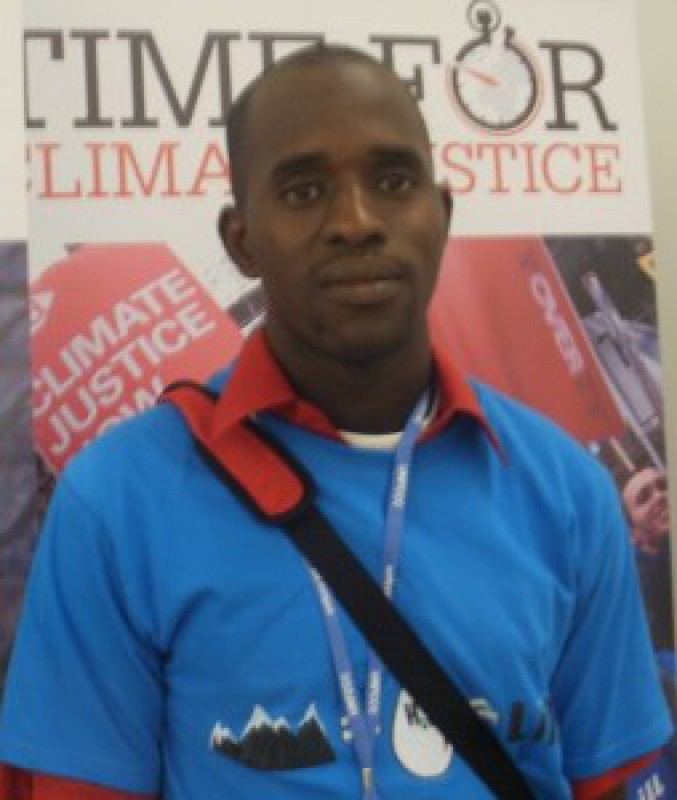
Rio +20 is around the corner and environmentalists, especially youth activists, around the world are gearing up for the big environmental show. Keeping in tune with the tradition of STEP to give voice to people in developing countries,, Anuj Sharma caught up with Ebrima S. Dem, national coordinator of Gambia chapter of Global Unification International (GUI) and Climate Change Focal point for The Network of African Youths for Development, to understand the green concerns emanating in Gambia and get an update on GUI Gambia’s preparation for the event.
Ebrima S. Dem, national coordinator of Gambia chapter of Global Unification International
click on photo to enlarge
Anuj: So tell us, how did the green journey begin for you; what sparked your interest and concern for the environment?
Ebrima: My interest in the field of sustainable development grew out of a personal desire to help and support my community. I was born in a village and spent my childhood in a setup where local communities used to take everything they need from the forest, such as medicine, food, shelter, and fodder for their animals, in a very sustainable way. Everybody used to take resources from the forest only to satisfy their needs. However, in recent times, people have become greedier and commercially oriented. A large number of trees have been cut and sold as timber firewood, charcoal. The rate at which the forest is now been destroyed is alarming.
As a young person, I thought that I should do something to reverse this trend. Hence begun my green journey; a journey to work in collaboration with local communities, so as to fight for and develop a safer climate regime. . .
Anuj: Many people feel about environmental concerns but inevitably feel helpless as lonely individuals when considering the powerful financial and political interests. What is your advice to those who want to help and do something constructive for the environment? Is there a hope for action on an individual level or do we need to be a part of the system to change it?
Ebrima: The choice to create a positive change is driven by passion; it grows out of a desire to improve a situation. Hence, it always begins with an idea conceived by a single person, and grows big as more people get motivated by the idea. So one should always persevere and never feel lonely doing what s/he believes to be right and worth fighting for.Living green and motivating others to do the same is not only about challenging powerful financial agglomerates but changing mind-sets of the people. The magic is always in the little alternate things we do; that is what makes all the difference.
Anuj: What is your and your organization plan for Rio +20?
Ebrima: My organisation is mobilising youth in Gambia around campaign call: Think Green and Act Green. Through this campaign, we hope to gather the ideas and concerns of youths in the process leading to Rio + 20 and influence its outcome. We are also considering organizing a youth consultative forum on Rio + 20, where all youth can come together and share their ideas on sustainability in general and Rio + 20 in particular . . .
|


|
DISCUSSION
Question(s) related to this article:
Despite the vested interests of companies and governments, Can we make progress toward sustainable development?
* * * * *
Latest reader comment:
[responding to CPNN article The film 'Demain', a manifesto?
Yes initiatives from the grassroots are important and necessary which will have a direct impact on the present and the future. But there are governments like India which are conscious of over exploitation of the earth’s resources and are taking suitable policy measures and also taking legal action against the exploiters.
We must emphasize public transportation and reduce our dependence on individual cars even though the auto industry will not like this.
Otherwise it is not demain but aujourdhui — the problems are there for us to see.

|
|



 by program area
 Become a CPNN Reporter